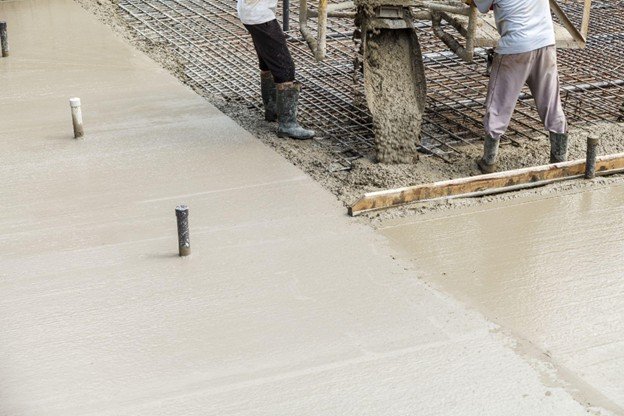
In a rapidly growing city like Frisco, the success of a subdivision or commercial project often depends on what happens before the first foundation is poured. Construction sites are high-traffic environments where dozens of heavy vehicles, from 80,000-pound concrete mixers to massive lumber deliveries, must move across raw land. If the site is not prepared correctly, the soft North Texas soil will turn into an impassable mud pit after a single afternoon thunderstorm. Planning concrete access roads in Frisco developments is the only way to keep your trades moving and your timeline on track.
Access roads serve as the “arteries” of the job site. They protect the expensive underground utilities and the stabilized subgrade that will eventually support the permanent subdivision concrete Frisco streets. When you are choosing the right commercial concrete contractor in Frisco, you need a partner who understands the logistics of site entry as much as the chemistry of the concrete.
1. The Strategy of “Staged” Paving
One of the most effective ways to manage a site in Frisco is to use a staged paving approach. Instead of waiting until the end of the project to pour the roads, savvy developers use the permanent road locations as access routes early on.
The Subgrade Protection Layer. We start by stabilizing the soil with lime or fly ash to create a hard “working table.” This prevents heavy trucks from “pumping” the wet clay to the surface. This is a vital step in avoiding concrete delays in Frisco residential developments.
Curb First vs Pavement First. In some subdivision concrete Frisco projects, we pour the curbs and gutters first to define the road edges and manage drainage. In others, we pour the main “access ribbon” of concrete first to provide a clean path for the framing and roofing crews.
2. Engineering for “Early Life” Loads
An access road must be engineered for its hardest day, which is usually the first week of construction.
Thickness for Construction Traffic. While a finished residential street might be 6 inches thick, a dedicated construction entrance or access road often requires 8 inches of reinforced concrete. This extra depth allows the road to handle the flatwork thickness requirements for commercial projects and levels of stress without cracking.
High-Early Strength Mixes. To keep the project moving, we often use “High-Early” concrete mixes that reach their design strength in 3 days instead of 28. This allows a commercial concrete contractor to know when to open the road to heavy equipment almost immediately after the concrete placement is finished.
3. Managing Drainage and Mud Track-Out
Frisco environmental inspectors are very strict about “track-out,” which is the mud that construction tires pull onto public city streets.
The “Construction Entrance” Pad. Every access road should begin with a 50 to 100-foot concrete or heavy-stone pad. This acts as a “tire wash” that shakes the North Texas clay off the trucks before they exit the site. If you fail to manage this, the city can shut down your project until the public roads are cleaned.
Temporary Culverts. During the road construction standards for the Frisco subdivisions phase, we must ensure that the access roads do not block the natural flow of water. We install temporary concrete culverts under the access points to prevent flooding on adjacent lots.
4. Protecting Underground Utilities
Nothing kills a budget faster than a heavy truck crushing a newly installed sewer line or water main.
Steel Plate Protection. In areas where the access road must cross a shallow utility trench, we use heavy steel plates to bridge the gap. This prevents the concrete foundations of the road from putting direct pressure on the pipes.
Utility Markers. We work with the site engineers to clearly mark every “soft spot” or utility crossing along the access route. This is a core part of what builders should expect from a subdivision concrete contractor in Frisco.
5. Coordinating the “Concrete Parade”
When it is time for a massive pour, such as a large warehouse floor, the logistics of the access road become a precision exercise.
Staging Areas. We design the access road with “turn-outs” or wide spots where 10 or 15 concrete trucks can wait their turn without blocking the main entrance. This is essential for managing how commercial concrete scheduling impacts projects in Frisco.
One-Way Loops. Whenever possible, we design a one-way loop for the site. Trucks enter through one access point and exit through another. This prevents “gridlock” and ensures the concrete placement happens at a consistent rate, which is key to preventing cracking in large concrete slabs in Frisco.
6. Maintenance of Temporary Routes
An access road is a living structure that requires maintenance throughout the life of the build.
Joint Sealing. Even temporary roads should have their joints sealed to prevent water from getting into the common foundation issues in North Texas soil clay. If the subgrade gets wet under the access road, the concrete will eventually sink or “pump.”
Repairing Edge Breaks. Heavy machinery often clips the edges of access roads. We perform quick “patch” repairs using high-strength mortars to ensure the road remains safe for smaller vehicles like electrician vans and plumbing trucks.
7. Transitioning to Permanent Infrastructure
The final stage of planning concrete access roads in Frisco developments is the transition to the final residential or commercial street.
Cleaning and Topping. Once the heavy construction is finished, the access road is thoroughly cleaned. If it was designed as a “base layer,” we then pour the final 2-inch or 3-inch “wear layer” of concrete or asphalt. This ensures the residents receive a brand-new surface despite the road having worked hard for a year.
ADA and Curb Finalization. The final driveway installation Frisco and sidewalk connections are made during this phase. We ensure that the elevations match perfectly with the slab foundation requirements in Frisco, TX, for the individual homes.
8. ROI of Professional Site Planning
Spending the money on a professional concrete access road upfront actually saves the developer money in the long run.
Reduced downtime. In the Frisco spring, it can rain for a week straight. Sites with dirt roads stay shut down for days after the rain stops. Sites with concrete access roads are back to work the next morning.
Lower Site Cleanup Costs. By containing the mud to a single entry point, you save thousands of dollars in street sweeping and site remediation costs. We break this down in our concrete timelines for subdivision builds in the Frisco guide.
Frequently Asked Questions
1. Can we use recycled concrete for access roads? Yes. Crushed recycled concrete is an excellent “base” material for temporary access roads. However, for a high-volume site, a thin 4-inch “mud slab” of new concrete is often more effective at keeping the site clean.
2. How wide should a concrete access road be? A single lane for a concrete truck should be at least 12 feet wide. For two-way traffic, 24 feet is the standard to ensure safety and prevent how commercial concrete scheduling in Frisco delays.
3. Does the City of Frisco require permits for temporary roads? Yes. Any road that connects to a public street or affects site drainage requires an approved site plan and a “SWPPP” (Stormwater Pollution Prevention Plan) permit.
4. How do you stop a heavy crane from cracking the access road? For extremely heavy equipment like cranes, we use “crane mats” or heavy timber pads on top of the concrete to distribute the weight. This is part of our preventing cracking in large concrete slabs in Frisco strategy.
5. Is it better to use concrete or asphalt for access roads? In North Texas, concrete is superior because it does not soften in the heat. An asphalt access road will often “unravel” under the weight of turning concrete trucks in the summer. We compare these in our concrete vs asphalt for commercial developments in Frisco article.