When you begin a new construction project in North Texas, one of the first engineering decisions you will face is the type of foundation to pour. Because the soil in this region is so active, the choice between a monolithic slab and a conventional slab is not just about cost. It is about how the building will handle the extreme shrinkage and swelling cycles of the local clay. Understanding monolithic vs conventional slabs in Frisco is essential for any developer or builder choosing the right commercial concrete contractor in Frisco.
Both designs have their place in the Frisco market, but they function very differently under pressure. This guide explains the technical differences and the specific slab foundation requirements in Frisco, TX, for each.
What is a Monolithic Slab?
In a monolithic pour, the word “monolithic” literally means “one stone.” This foundation is a single, continuous pour of concrete that creates the floor and the deep perimeter beams at the same time.
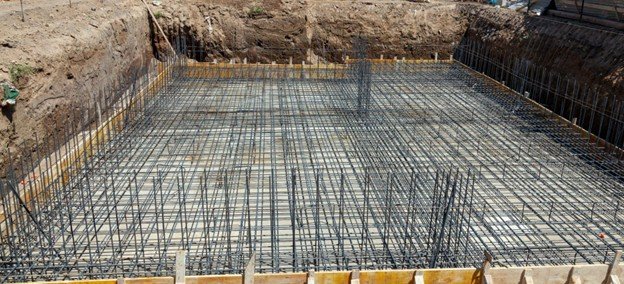
The Design Mechanics. The entire slab is reinforced with a grid of rebar or post-tension cables. Because it is a single piece of concrete, it moves as one unit. This is the most common foundation for subdivision concrete Frisco residential projects.
Speed and Efficiency. Builders prefer monolithic slabs because they are faster to install. There is only one concrete placement Frisco event, which significantly helps in avoiding concrete delays in Frisco residential developments. By pouring everything at once, you eliminate the need for multiple inspections and waiting periods between different sections of the foundation.
2. What is a Conventional (Stem Wall) Slab?
A conventional slab, also known as a “floating” slab or a stem wall foundation, is poured in two or more separate stages.
The Two-Stage Process. First, the deep perimeter walls (the stem walls) are poured and allowed to harden. Then, the center of the area is filled with gravel or soil, and a separate concrete floor is poured on top. The floor is not physically attached to the walls in the same way a monolithic slab is.
Use in Custom and Sloped Lots. Conventional slabs are often used in Frisco when the building site has a significant slope. They allow the builder to create a level “box” for the house to sit on. This design is also frequent in commercial concrete contractors in Frisco: what to know before you build projects where heavy interior machinery requires a thicker floor than the rest of the building.
3. Performance in North Texas Clay
The “Black Gumbo” soil in North Texas puts immense stress on any concrete structure.
Monolithic Performance. Because the monolithic slab is a single rigid piece, it resists “differential settlement” well. If one corner of the house settles, the strength of the entire slab helps prevent that corner from snapping off. This is vital for concrete foundations in Frisco to avoid long-term structural issues.
Conventional Performance. In a conventional slab, the floor can move independently of the walls. In North Texas, this can sometimes lead to “slab heaving,” where the center of the floor rises while the walls stay put. This is a common contributor to common foundation issues in North Texas soil. To prevent this, engineers often require extra soil stabilization under the floating floor.
4. Cost and Labor Comparisons
For many developers, the decision comes down to the budget and the concrete timelines for subdivision builds in Frisco.
Monolithic Cost. Generally, monolithic slabs are less expensive. They require less labor because the forms only need to be set once. There is also less waste during the concrete placement process.
Conventional Cost. Conventional slabs are more labor-intensive. You have to pay for two separate pours, two separate sets of forms, and two separate trips from the concrete paving Frisco crew. However, for a high-end custom home or a large commercial concrete facility, the extra cost may be worth the added flexibility in design.
5. Frisco Inspection Requirements
The City of Frisco has strict rules for both types of foundations. You should expect your contractor to be an expert in managing these “stop-points.”
Monolithic Inspections. You typically need one major inspection after the rebar and vapor barrier are in place. This is a high-pressure moment because any error will stop a large pour of 50 or 60 yards of concrete.
Conventional Inspections. You will need an inspection for the stem walls first. Once those are poured and the interior is filled and compacted, you need a second inspection for the floor slab. This adds complexity to how commercial concrete scheduling impacts projects in Frisco.
6. Durability and Crack Prevention
Cracking is a major concern in the North Texas heat.
Joint Management. In a monolithic slab, we use saw-cutting to create “control joints.” This tells the concrete exactly where to crack as it shrinks. This is a primary method for preventing cracking in large concrete slabs in Frisco.
Independent Movement. In a conventional slab, the joint between the floor and the wall acts as a natural control joint. However, if this joint is not sealed correctly, it can allow moisture to seep in, leading to common foundation issues in North Texas soil.
7. Logistics for Subdivision Paving
When building out an entire neighborhood, the choice of slab type affects the whole site plan.
Street Transitions. The foundation type can influence how we handle the driveway installation process in Frisco. Monolithic slabs are often easier to tie into the street paving because the elevations are more predictable.
Access Planning. A monolithic pour requires a large number of trucks in a short window. We work with builders on planning concrete access roads in Frisco developments to ensure the heavy trucks do not damage the subgrade while reaching the lot.
8. Which One is Right for Your Frisco Project?
Choose Monolithic if: You are building on a relatively flat lot, you want to move quickly, and you are looking for the most cost-effective solution for a high-volume subdivision.
Choose Conventional if: Your lot has a steep slope, you are building a heavy industrial facility, or your project requires a “sunken” floor for specific retail or medical equipment.
Regardless of the choice, what builders should expect from a subdivision concrete contractor in Frisco is a detailed engineering plan that accounts for the local clay.
Frequently Asked Questions
1. Is one slab type stronger than the other? Not necessarily. Both can be engineered to be incredibly strong. The monolithic slab is generally more rigid as a single unit, while the conventional slab offers more flexibility for complex site conditions. Both must meet slab foundation requirements in Frisco, TX.
2. Why are monolithic slabs so popular in Frisco? The combination of flat prairie land and the need for fast housing production makes the monolithic slab the “standard” for North Texas. It is perfectly suited for subdivision concrete Frisco projects.
3. Do conventional slabs have more issues with termites or moisture? If not sealed correctly, the “cold joint” between the floor and the wall in a conventional slab can provide a path for moisture. Professional contractors use high-grade vapor barriers to prevent this.
4. Can I use decorative concrete on either slab type? Yes. You can use decorative concrete Frisco or stamped concrete patios Frisco as a finish for either foundation.
5. How does the choice of slab affect my construction timeline? A monolithic slab can save you three to five days on your schedule because it requires fewer steps and fewer trips from the concrete placement Frisco crew.