If you own property in Frisco, you are likely familiar with the reputation of the local soil. The region sits on a thick layer of expansive clay known as Black Gumbo. This soil is chemically active and physically powerful. It can lift an entire house during a rainy spring and drop it several inches during a summer drought. Understanding common foundation issues in North Texas soil is the first step toward protecting your investment.
Whether you are a homeowner noticing new cracks or a developer choosing the right commercial concrete contractor in Frisco, you must account for the constant movement of the earth. This guide outlines the most frequent problems and the technical reasons they occur.
1. The Shrink-Swell Cycle of Black Gumbo Clay
The primary cause of concrete foundations’ failure is the extreme volume change of the clay. This soil acts like a giant sponge.
Upheaval during Wet Months. When North Texas experiences heavy spring rains, the clay absorbs water and expands. This expansion creates upward pressure that can exceed 5,000 pounds per square foot. If the slab is not thick enough or the beams are too shallow, the center of the floor will hump upward. This is a major concern for subdivision concrete Frisco projects built on improperly conditioned soil.
Settlement during Droughts. In the 100°F heat of a Frisco summer, the clay loses moisture and shrinks. As the soil pulls away from the edges of the foundation, the concrete loses its support and begins to sag. This uneven sinking is what causes the most visible damage to a building.
2. Differential Settlement and Structural Cracking
Foundation movement is rarely uniform. Problems occur when one corner of a building sinks faster than the others.
Stair-Step Cracks. If you see cracks in your exterior brick that follow the mortar lines in a zigzag pattern, you are looking at differential settlement. This happens when the soil under one part of the concrete paving in Frisco has failed to hold the weight.
Interior Slab Cracks. While some small hairline cracks are normal as concrete dries, large cracks that run across the floor indicate a structural break. This often occurs when preventing cracking in large concrete slabs in Frisco protocols, such as proper rebar placement or saw-cutting, were ignored during the initial pour.
3. Improper Drainage and Water Pooling
In North Texas, water is the enemy of a stable foundation. Poor site drainage is a leading contributor to common foundation issues in North Texas soil.
Negative Grading. If the ground slopes toward the house rather than away from it, rainwater will collect against the foundation. This oversaturates the clay in one specific spot, causing localized swelling and “heaving” of the slab.
Erosion under the Slab. When water flows too quickly along the edge of a foundation, it can wash away the supporting soil. This creates a void or an empty pocket under the concrete. Without soil to sit on, the heavy concrete placement in Frisco will eventually crack and fall into the hole.
4. The Impact of Mature Trees and Vegetation
Trees are beautiful, but their root systems are incredibly efficient at “drinking” the water out of the soil under your home.
Transportation Settlement. During a dry Frisco summer, a large oak tree can pull hundreds of gallons of water from the ground every day. If that tree is too close to the house, it will dry out the clay under the foundation much faster than the rest of the yard. This causes the slab to settle toward the tree.
Root Intrusion. In some cases, massive roots can physically grow under a driveway installation in Frisco or a shallow foundation beam and lift the concrete. This is why planning concrete access roads in Frisco developments must include a professional landscape plan.
5. Plumbing Leaks under the Slab
A hidden leak in a freshwater line or a sewer pipe can cause a foundation to fail in a matter of months.
Localized Heaving. Because the leak is under the center of the house, that specific patch of clay stays constantly wet while the rest of the yard dries out. This causes the center of the slab to push upward, creating a “dome” effect. You may notice doors that suddenly stick or windows that will not open.
Plumbing Rough-In Failures. To prevent this, what builders should expect from a subdivision concrete contractor in Frisco is perfect coordination with the plumbing crew. Every pipe must be properly sleeved and tested before the concrete placement begins.
6. Poor Initial Construction and Soil Prep
Many common foundation issues in North Texas soil can be traced back to shortcuts taken during the building phase.
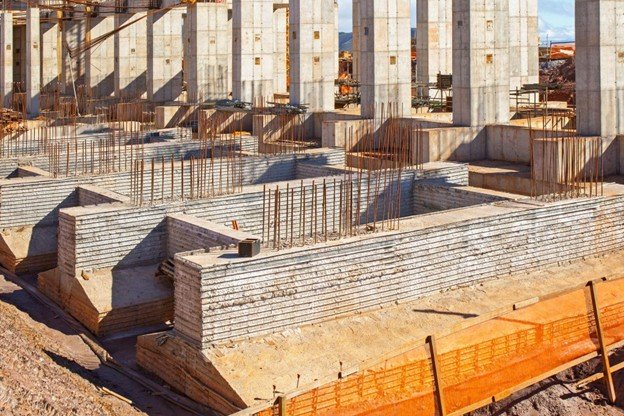
Insufficient Beam Depth. In Frisco, foundation beams must be deep enough to reach the stable soil layers. If the beams are too shallow, they simply “float” on top of the moving clay. This violates the core slab foundation requirements in Frisco, TX.
Skipping Moisture Conditioning. If a contractor pours concrete on dry, dusty clay to save time, they are asking for trouble. As soon as the homeowners start watering their lawn, that dry clay will expand and lift the brand new house. This is why avoiding concrete delays in Frisco residential developments must never come at the expense of soil preparation.
7. Signs of Foundation Trouble for Owners
If you live in North Texas, you should inspect your property twice a year for these warning signs.
Interior Warnings. Look for cracks in the drywall, especially above door frames or at the corners of windows. Check if your cabinet doors or interior doors are suddenly misaligned.
Exterior Warnings. Look for gaps between the garage door and the pavement. Check the “frieze board,” which is the trim where the siding meets the brick. If there is a growing gap there, your foundation is likely settling. This is often seen in commercial concrete contractors in Frisco: what to know before your build evaluations for older retail centers.
8. Preventive Maintenance Strategies
You can significantly reduce the risk of foundation failure by managing the moisture around your property.
Soaker Hoses. During the dry months, using a soaker hose around the perimeter of the foundation can keep the clay from shrinking and pulling away. This maintains a consistent “moisture curtain” around the concrete foundations.
Gutter Extensions. Ensure your gutters discharge water at least five feet away from the foundation. This prevents the soil from becoming oversaturated in one spot.
Frequently Asked Questions
1. Is every crack in a North Texas foundation a sign of failure? No. Concrete naturally shrinks as it dries, which can cause hairline cracks. However, any crack large enough to fit a coin or any crack that is wider at one end than the other should be inspected by a professional. This is part of preventing cracking in large concrete slabs in Frisco.
2. How much does foundation repair cost in Frisco? Repair costs vary wildly based on the number of “piers” needed to stabilize the slab. It is always cheaper to invest in choosing the right commercial concrete contractor in Frisco and doing it right the first time.
3. Will watering my foundation really help? Yes. In the North Texas heat, the goal is to keep the soil moisture consistent. You are not trying to “flood” the house, just preventing the clay from cracking and pulling away.
4. What is the best foundation type for North Texas soil? Most engineers recommend either a heavy monolithic slab with deep beams or a post-tension slab. We discuss these in our monolithic vs conventional slabs in Frisco guide.
5. How does the Frisco building code protect me? The city requires third-party engineering and multiple inspections during the concrete placement process. These checks are designed to catch soil prep errors before they become permanent problems.