One of the first questions property owners, homeowners, and builders ask is: How much does a concrete slab cost?
Whether you’re installing a new concrete patio, building a garage, preparing a foundation, or developing a commercial property, understanding concrete slab pricing can help you establish a realistic construction budget.
In 2026, standard concrete slab installation in Texas generally falls around $6–$12 per square foot, depending on the project specifications and local conditions. However, this is only a planning estimate. More complex foundations, reinforced slabs, difficult site conditions, and specialized finishes can increase the overall cost.
For property owners in Frisco and the greater North Texas area, additional considerations include soil preparation, drainage, reinforcement, concrete thickness, and construction accessibility.
At Redstone Concrete Co., understanding the requirements of a concrete project is an important starting point for planning a successful installation.
This guide breaks down concrete slab costs in Texas for 2026, explains what influences pricing, and helps you understand what to consider before requesting a concrete installation estimate.
1. How Much Does a Concrete Slab Cost Per Square Foot in Texas?
The cost of a concrete slab depends on its size, thickness, intended use, materials, labor, and site preparation requirements.
For a straightforward standard slab, a reasonable 2026 planning range is approximately $6–$12 per square foot installed.
Here’s a general breakdown:
| Concrete Project | Estimated Cost Per Square Foot |
|---|---|
| Standard 4-inch concrete slab | $6–$12 |
| Basic concrete patio | $6–$10 |
| Standard concrete driveway | $6–$11 |
| Concrete sidewalk | $5–$9 |
| Reinforced or upgraded flatwork | $10–$14 |
| Decorative or stamped concrete | $12–$20+ |
| Engineered commercial or industrial foundation | Project-specific |
These are broad planning estimates, not guaranteed Redstone Concrete Co. prices. Actual costs depend on the specifications, location, contractor, and scope of work. Different pricing guides also use different assumptions about what is included in an installed price.
For example, some estimates include standard preparation, reinforcement, and finishing, while others exclude excavation, demolition, drainage improvements, or engineering.
According to 2026 Texas concrete slab pricing estimates, a standard 4-inch slab can fall within the $6–$12 per-square-foot range.
The important thing is to compare estimates with matching specifications rather than relying on the lowest advertised price.
2. Concrete Slab Cost Examples by Project Size
One of the easiest ways to estimate your concrete budget is to calculate the square footage of the planned installation.
For example, a 20-by-20-foot slab contains 400 square feet.
Using the $6–$12 planning range, the estimated installation cost would be $2,400–$4,800.
Here are additional examples:
| Slab Dimensions | Square Footage | Estimated Installed Cost |
|---|---|---|
| 10 × 10 feet | 100 sq. ft. | $600–$1,200 |
| 12 × 12 feet | 144 sq. ft. | $864–$1,728 |
| 20 × 20 feet | 400 sq. ft. | $2,400–$4,800 |
| 20 × 30 feet | 600 sq. ft. | $3,600–$7,200 |
| 30 × 30 feet | 900 sq. ft. | $5,400–$10,800 |
| 40 × 50 feet | 2,000 sq. ft. | $12,000–$24,000 |
These calculations use the same standard-slab planning range and are not project quotations.
Larger projects may benefit from more efficient material delivery and labor scheduling, but additional engineering, reinforcement, grading, and equipment requirements can also increase costs.
For larger construction projects, reviewing Redstone Concrete’s large-scale flatwork services can help you understand the types of concrete installations involved.
3. What Factors Affect Concrete Slab Installation Costs?
Two concrete slabs with identical dimensions can have significantly different installation costs.
The reason is that square footage is only one part of the overall construction requirements.
Concrete Thickness
Thickness directly affects how much concrete is required.
A standard 4-inch slab may be suitable for certain pedestrian or light-use applications, but heavier vehicle traffic or structural requirements may call for a thicker installation.
Common considerations include:
- 4-inch slabs for suitable light-duty applications.
- 5-inch slabs for certain vehicle-use applications.
- 6-inch or thicker slabs for applications with greater loading requirements.
These are illustrative categories, not universal design specifications. The appropriate thickness must be determined by the intended use, loads, subgrade conditions, and applicable engineering requirements.
Concrete Reinforcement
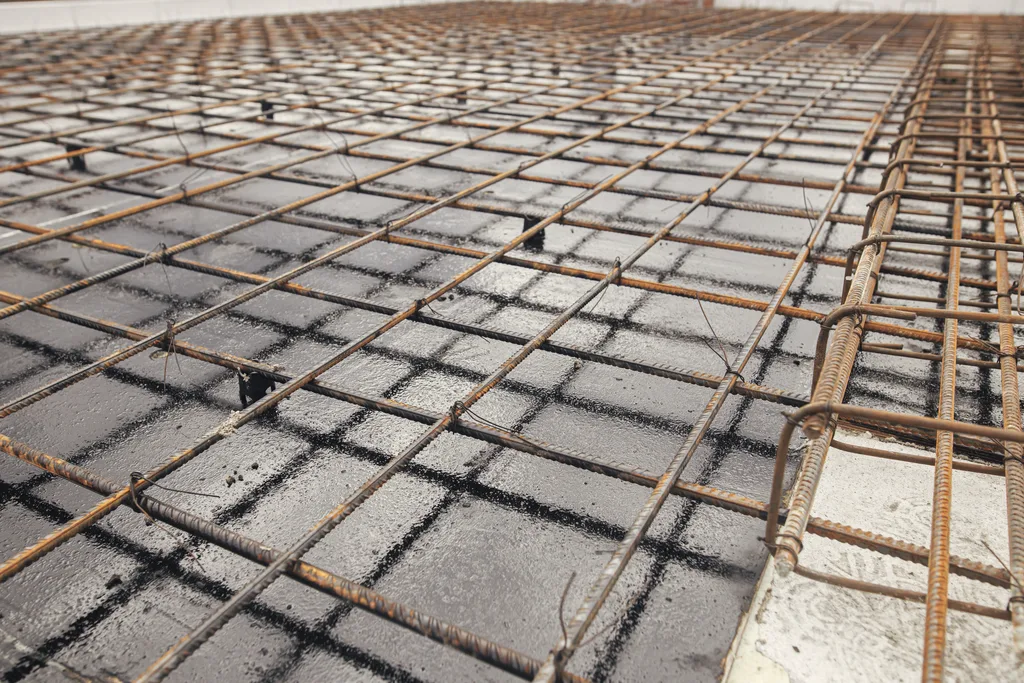
Reinforcement can increase material and labor costs, but it may be necessary to meet the design requirements of a project.
Depending on the application, reinforcement may include:
- Steel rebar.
- Welded wire reinforcement.
- Fiber-reinforced concrete.
- Post-tensioning systems for engineered foundations.
The correct reinforcement system depends on the structural design and intended use of the slab.
Site Preparation and Excavation
Site preparation is another major cost consideration.
Before concrete is poured, the ground may need to be excavated, graded, compacted, and prepared with an appropriate base.
Additional work may include:
- Removing existing concrete.
- Clearing vegetation and debris.
- Excavating unsuitable soil.
- Installing and compacting aggregate base material.
- Correcting drainage issues.
- Preparing forms and elevations.
Skipping necessary preparation can lead to settlement, cracking, and other problems.
Concrete Mix and Material Requirements
Concrete mix specifications depend on the project.
Factors such as specified compressive strength, exposure conditions, placement requirements, and finishing characteristics can influence material costs.
The contractor should recommend a mix that meets the project specifications rather than selecting materials based solely on price.
Labor and Equipment
Concrete installation involves more than pouring a truckload of concrete.
Depending on the project, labor and equipment may be required for excavation, forming, reinforcement placement, concrete delivery, finishing, curing, and cleanup.
Difficult site access or restricted working hours may also affect the estimate.
4. How North Texas Soil Conditions Can Affect Concrete Costs
For property owners in Frisco, Plano, McKinney, and surrounding North Texas communities, soil conditions deserve particular attention.
Parts of North Texas contain expansive clay soils that can swell when moisture increases and shrink during extended dry periods.
This movement can place stress on concrete installations, particularly when the subgrade is not properly evaluated and prepared.
A concrete slab installed over poorly prepared soil may experience:
- Uneven settlement.
- Differential movement.
- Cracking.
- Changes in slab elevation.
- Drainage-related deterioration.
This is why site evaluation and ground preparation should be included in the planning process.
Why Proper Foundation Preparation Matters
A successful concrete installation begins beneath the finished surface.
Depending on the project, preparation may involve soil evaluation, grading, compaction, base installation, and engineered foundation specifications.
For structural applications, foundation design should be based on appropriate engineering and geotechnical information.
If you’re planning a building foundation in the area, explore Redstone Concrete’s concrete foundation services.
You can also read our related guide on common foundation issues in North Texas soil to understand why ground conditions matter.
5. Concrete Slab Costs by Project Type
Not all concrete installations serve the same purpose. A residential patio, commercial parking area, garage floor, and building foundation each have different construction requirements.
Concrete Patio Installation
Concrete patios are popular because they provide durable outdoor living surfaces.
The cost depends on the patio dimensions, thickness, surface finish, site preparation, and any decorative upgrades.
A basic broom-finished patio may cost less than a stamped or custom decorative installation.
If you’re considering an outdoor concrete project, explore custom concrete patio services.
Concrete Driveway Installation
Driveways must accommodate vehicle traffic and should be designed for their intended loading conditions.
Important cost factors include:
- Driveway dimensions.
- Concrete thickness.
- Reinforcement requirements.
- Excavation and grading.
- Existing driveway removal.
- Surface finishing.
For homeowners planning a new installation, see concrete driveway installation services.
Garage and Shop Slabs
Garage floors and shop slabs may require additional thickness, reinforcement, or specific surface requirements depending on the equipment and vehicles they will support.
A workshop with heavy equipment will have different design requirements from a standard residential garage.
Commercial Concrete Foundations
Commercial building foundations require more detailed planning than many basic flatwork installations.
The design may need to account for building loads, column locations, soil conditions, reinforcement, vapor barriers, and engineering specifications.
For these projects, the concrete contractor should work from the approved project plans and coordinate with the appropriate design professionals.
Explore commercial concrete construction services for more information about larger concrete construction projects.
6. How to Calculate How Much Concrete You Need
Knowing the amount of concrete required can help you understand material quantities and evaluate project estimates.
Concrete is typically measured in cubic yards.
Use this formula:
Length × Width × Thickness ÷ 27 = Cubic Yards
Make sure all measurements are in feet.
For example, consider a slab measuring:
- Length: 20 feet.
- Width: 20 feet.
- Thickness: 4 inches, or approximately 0.333 feet.
Calculation:
20 × 20 × 0.333 ÷ 27 = approximately 4.94 cubic yards.
This is the theoretical concrete volume before accounting for additional material requirements, waste, irregularities, or site conditions.
Your contractor should confirm the final order quantity based on the actual project measurements.
Accurate calculations help prevent ordering too little or too much concrete.
7. How to Save Money on a Concrete Slab Without Sacrificing Quality
Reducing concrete installation costs does not mean choosing the cheapest materials or cutting corners during preparation.
The better approach is to make informed decisions before construction begins.
Here are several practical ways to manage your budget:
Plan your dimensions carefully. Accurate measurements help avoid unnecessary material requirements.
Prepare the site properly. Addressing grading and soil issues before pouring can reduce the risk of expensive future repairs.
Choose an appropriate finish. Standard finishes may be more economical than stamped, colored, or decorative options.
Compare detailed contractor estimates. Make sure each proposal includes comparable thickness, reinforcement, preparation, and finishing specifications.
Coordinate construction schedules. Proper scheduling can reduce delays and unnecessary equipment or labor costs.
Avoid unnecessary design changes. Changes after site preparation or formwork can increase project expenses.
Remember that reducing the initial cost by eliminating essential reinforcement or preparation can create more expensive problems later.
8. What Should You Ask Before Hiring a Concrete Contractor in Texas?
Before approving a concrete installation estimate, make sure you understand exactly what the contractor is proposing.
Consider asking:
- What concrete thickness is recommended for my project?
- What type of reinforcement will be installed?
- Is excavation and grading included?
- Will the existing ground require additional preparation?
- What concrete mix specifications will be used?
- How will drainage be addressed?
- What type of finish is included?
- How long will the project take?
- What curing and access restrictions should I expect?
- Are permits, engineering, and inspections included or excluded?
A detailed written estimate should explain the project scope, materials, preparation, labor, exclusions, and expected schedule.
If you’re planning a concrete project in Frisco, visit the Frisco concrete construction service area to explore relevant services.
9. Frequently Asked Questions About Concrete Slab Costs in Texas
How much does a 20 × 20 concrete slab cost in Texas in 2026?
A 20 × 20-foot slab contains 400 square feet. Using a general installed planning range of $6–$12 per square foot, the estimated cost is $2,400–$4,800. Actual pricing depends on thickness, reinforcement, site preparation, and finishing.
How much does a concrete slab cost per square foot in Texas?
A standard 4-inch concrete slab generally falls around $6–$12 per square foot installed in 2026. Specialized foundations, difficult site conditions, and decorative finishes can cost more.
Is a 4-inch concrete slab thick enough?
A 4-inch slab may be appropriate for certain patios, walkways, and light-duty applications. However, driveways, commercial installations, and structural foundations may require different specifications. Always match the slab design to its intended use and loading requirements.
Does concrete slab pricing include labor and materials?
Many installed price estimates include concrete, standard labor, and basic finishing. However, excavation, demolition, engineering, reinforcement upgrades, drainage improvements, and permits may be separate expenses. Always review the written estimate.
Why does concrete cost more in some parts of Texas?
Pricing varies based on local labor availability, concrete suppliers, transportation, site conditions, project accessibility, and construction specifications. North Texas soil conditions can also make additional preparation necessary.
How long does a concrete slab take to cure?
Concrete begins gaining strength after placement, but curing continues over time. A common reference point is 28 days for specified compressive strength testing. Actual strength development depends on the mix, weather, and curing conditions. Pedestrian and vehicle access should follow the project specifications and contractor’s guidance.
Is reinforced concrete more expensive?
Yes, reinforcement can increase the cost of an installation because of additional materials and labor. However, reinforcement may be necessary to meet the design requirements and intended loading of the slab.
10. Get a Concrete Installation Estimate for Your Texas Project
Understanding concrete slab costs is an important first step toward planning a successful construction project.
Whether you’re installing a patio, replacing a driveway, building a garage floor, preparing a commercial property, or planning a new foundation, the final price depends on more than square footage.
Concrete thickness, reinforcement, site preparation, drainage, material specifications, and finishing all influence the total investment.
For property owners in Frisco and surrounding North Texas communities, working with a contractor who understands the requirements of the project can help you make informed decisions before construction begins.
Planning a concrete project in Frisco, TX?
Contact Redstone Concrete Co. to discuss your concrete installation needs and request a project estimate.
Whether you need concrete foundations, large-scale concrete flatwork, concrete paving, or a custom concrete installation, start with a clear understanding of your project’s specifications and requirements.