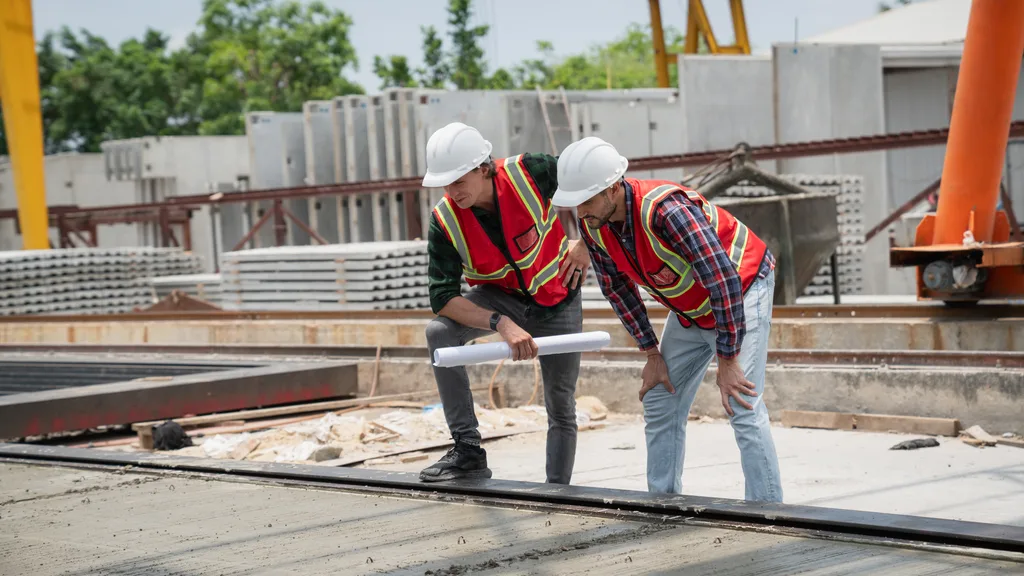
Commercial concrete works is one of the most important investments property owners make when developing, improving, or maintaining a commercial property. From parking lots and sidewalks to foundations, loading areas, and concrete slabs, the quality of the work directly affects safety, durability, accessibility, and long-term maintenance costs.
For property owners in Frisco, TX, choosing the right commercial concrete contractor means understanding more than just the initial project estimate. North Texas weather, soil conditions, drainage requirements, construction schedules, and the demands of commercial traffic can all influence how a concrete project should be planned and completed.
Whether you manage a retail center, office building, industrial facility, restaurant, warehouse, or commercial development, understanding the fundamentals of commercial concrete construction can help you make better decisions.
At Redstone Concrete Co., commercial concrete projects are part of a broader range of concrete construction solutions. This guide explains what Frisco property owners should know before hiring a commercial concrete contractor, which services may be necessary, and how to evaluate the quality of a proposed project.
1. Why Choosing the Right Commercial Concrete Contractor Matters
Commercial concrete projects require careful planning, appropriate materials, experienced workmanship, and coordination with other construction activities.
Unlike many residential concrete projects, commercial installations often need to accommodate heavier loads, frequent vehicle traffic, pedestrian activity, and specific building or site requirements.
A qualified commercial concrete contractor should understand how to approach projects involving:
- Commercial concrete foundations and structural slabs.
- Parking lots and concrete paving.
- Sidewalks, walkways, and pedestrian access areas.
- Concrete curbs and gutters.
- Loading docks and truck access areas.
- Concrete approaches and driveways.
- Concrete demolition and replacement.
- New commercial construction and site improvements.
For Frisco property owners, the goal should be to find a contractor who understands the intended use of the property and can recommend an appropriate construction approach.
For example, a concrete surface supporting delivery trucks will have different design considerations from a pedestrian walkway outside a retail storefront.
The contractor should evaluate the project requirements before recommending concrete thickness, reinforcement, joint placement, drainage solutions, and finishing methods.
Property owners interested in understanding the available solutions can explore Redstone Concrete’s commercial concrete services to learn more about its commercial construction capabilities.
2. How North Texas Conditions Affect Commercial Concrete Projects
Frisco’s location in North Texas creates environmental considerations that property owners should discuss before beginning construction.
Concrete is durable, but it is not immune to environmental stress. Temperature changes, moisture conditions, ground movement, and drainage problems can contribute to cracking, settlement, and surface deterioration.
Temperature Changes and Concrete Performance
North Texas experiences hot summers, seasonal temperature fluctuations, and occasional freezing conditions.
These changes can affect concrete expansion and contraction.
Proper joint placement, curing procedures, mix selection, and installation practices help manage these conditions.
Soil Conditions and Ground Preparation
Subgrade preparation is one of the most important parts of a commercial concrete installation.
If the ground beneath a concrete slab or pavement is poorly prepared, the finished surface may experience settlement, cracking, or uneven areas.
Before installation, property owners should ask whether the contractor will evaluate:
- Existing soil and subgrade conditions.
- Required excavation and grading.
- Compaction requirements.
- Base material specifications.
- Drainage and water management.
- Reinforcement requirements.
The appropriate preparation depends on the project design, site conditions, and anticipated loads.
For additional information about concrete construction in the area, see our guide to common foundation issues in North Texas soil.
Drainage and Water Management
Standing water can create maintenance problems around commercial properties.
Poor drainage may contribute to erosion, surface deterioration, water infiltration, and unsafe pedestrian conditions.
A commercial concrete contractor should consider how the finished surface will direct water toward appropriate drainage systems.
This is especially important for parking areas, loading zones, sidewalks, and building entrances.
3. Commercial Concrete Services Property Owners May Need
Not every commercial property requires the same concrete services. Understanding the available options helps property owners identify what their project actually needs.
Commercial Concrete Foundations and Slabs
Concrete foundations and slabs provide support for commercial buildings, additions, equipment areas, and other structures.
The design should account for building requirements, soil conditions, reinforcement, and anticipated loading.
Explore concrete foundation services to learn more about the importance of properly planned foundation construction.
Commercial Concrete Paving and Parking Areas
Concrete paving can be used in commercial parking facilities, access roads, drive lanes, and other vehicle-use areas.
Important considerations include:
- Expected vehicle traffic.
- Load requirements.
- Pavement thickness.
- Reinforcement and joint design.
- Drainage.
- Long-term maintenance.
For larger commercial developments, concrete paving services can help address the requirements of vehicle-access areas and paved surfaces.
Concrete Sidewalks and Walkways
Sidewalks and pedestrian walkways help connect parking areas, building entrances, storefronts, and outdoor spaces.
Proper grading, surface finishing, joint placement, and accessibility considerations are essential.
Commercial property owners should also consider applicable accessibility requirements when planning pedestrian routes.
Concrete Curbs and Gutters
Concrete curbs and gutters help define pavement edges and manage surface runoff.
They are commonly incorporated into commercial parking lots, roadway improvements, and site development projects.
Large-Scale Commercial Concrete Flatwork
Large commercial slabs and flatwork installations require careful attention to subgrade preparation, reinforcement, concrete placement, and finishing.
These surfaces may support warehouses, retail buildings, equipment, and other commercial operations.
Learn more about large-scale concrete flatwork and the considerations involved in planning larger concrete installations.
Concrete Repair and Replacement
Existing commercial concrete may eventually develop cracks, settlement, spalling, or other damage.
Depending on the underlying cause, repairs may involve localized patching, slab replacement, joint repairs, or complete reconstruction.
A contractor should identify the reason for the damage rather than simply covering visible problems.
4. What Should Property Owners Look for Before Hiring a Contractor?
Selecting a commercial concrete contractor in Frisco, TX, should involve more than comparing prices.
The contractor’s experience, project planning, communication, and ability to explain construction details are equally important.
Commercial Project Experience
Ask whether the contractor has completed projects similar to yours.
Experience with commercial parking areas, foundations, industrial slabs, or retail properties can be particularly valuable when the project involves specialized requirements.
You can learn more about Redstone Concrete Co. and its approach to concrete construction before discussing your project.
Insurance and Licensing Requirements
Verify that the contractor maintains appropriate insurance coverage and meets applicable licensing, registration, and project-specific requirements.
Depending on the scope of work, additional documentation or qualifications may be necessary.
Detailed Project Estimates
A professional estimate should clearly explain the proposed work.
Look for details such as:
- Demolition and removal, if required.
- Excavation and site preparation.
- Base material and compaction.
- Concrete specifications.
- Reinforcement.
- Formwork and placement.
- Jointing and finishing.
- Cleanup and project completion.
A detailed estimate makes it easier to compare proposals and identify missing work.
Project Scheduling and Communication
Commercial properties often need to remain operational during construction.
Discuss the proposed schedule, access restrictions, delivery coordination, work zones, and communication procedures before signing an agreement.
A good contractor should explain how the work may affect tenants, employees, customers, and visitors.
For more insight into this topic, read our related article about commercial concrete scheduling and its impact on projects in Frisco.
5. How Much Does Commercial Concrete Work Cost in Frisco, TX?
Commercial concrete project costs vary significantly depending on the type of installation and the condition of the property.
There is no single price that applies to every commercial concrete project.
Factors that influence the final estimate include:
Project size: Larger installations require more materials, labor, equipment, and preparation.
Concrete specifications: Required strength, mix design, reinforcement, and finishing requirements can affect material costs.
Site preparation: Excavation, grading, demolition, and subgrade improvements may add to the project scope.
Accessibility: Limited access, existing structures, and operational restrictions can increase labor and equipment requirements.
Project complexity: Foundations, loading areas, specialized slabs, and drainage improvements may require additional planning and coordination.
Construction schedule: Phased work, restricted operating hours, and accelerated timelines can influence project costs.
Property owners should request a written estimate that identifies the scope, specifications, exclusions, and anticipated schedule.
The lowest bid is not necessarily the best value. An incomplete estimate may leave out essential preparation or construction requirements that could lead to additional costs later.
6. How Does a Commercial Concrete Project Typically Work?
Understanding the construction process helps property owners know what to expect.
Although each project is different, a typical commercial concrete installation follows several stages.
Step 1: Initial Consultation and Site Evaluation
The contractor reviews the property, discusses the intended use, evaluates existing conditions, and identifies project requirements.
Step 2: Project Planning and Specifications
The construction scope is established, including dimensions, concrete specifications, reinforcement, drainage considerations, and scheduling.
Engineering or design documentation may be required depending on the project.
Step 3: Site Preparation
Existing materials may be removed, the ground excavated, and the subgrade prepared according to project specifications.
Step 4: Formwork and Reinforcement
Forms are installed to establish the required dimensions and elevations. Reinforcement is placed according to the approved design.
Step 5: Concrete Placement and Finishing
Concrete is delivered, placed, consolidated where required, and finished to achieve the specified surface characteristics.
Step 6: Curing and Protection
The concrete is cured and protected according to the project specifications and environmental conditions.
Step 7: Final Inspection and Project Handover
The completed installation is reviewed, cleanup is performed, and any remaining project documentation or maintenance recommendations are provided.
7. Common Commercial Concrete Mistakes Property Owners Should Avoid
A commercial concrete project can become more expensive when important details are overlooked.
Some common mistakes include:
- Selecting a contractor based exclusively on the lowest price.
- Ignoring subgrade preparation and compaction.
- Failing to consider drainage before installation.
- Using specifications that do not match expected traffic loads.
- Overlooking joint placement and curing requirements.
- Failing to coordinate construction with tenants and business operations.
- Not clarifying warranty terms and project responsibilities.
- Starting work without confirming applicable permits and approvals.
Taking time to review these issues before construction begins can help reduce avoidable problems.
8. Frequently Asked Questions About Commercial Concrete Contractors in Frisco, TX
What does a commercial concrete contractor do?
A commercial concrete contractor handles concrete construction and improvement projects for commercial properties. Services may include foundations, slabs, parking areas, sidewalks, curbs, loading zones, demolition, and concrete replacement.
How long does a commercial concrete project take?
Project duration depends on the size, complexity, site preparation, weather, concrete specifications, and curing requirements. A small sidewalk replacement may take considerably less time than a large commercial slab or parking area.
How thick should commercial concrete be?
There is no universal thickness for commercial concrete. The required thickness depends on the intended use, anticipated loads, subgrade conditions, engineering specifications, and applicable design requirements.
Does commercial concrete need reinforcement?
Reinforcement requirements depend on the design and intended application. Reinforcement may include steel rebar, welded wire reinforcement, fibers, or other specified systems.
When can a commercial concrete surface be used after installation?
Opening a concrete surface to pedestrian or vehicle traffic depends on the concrete mix, curing conditions, project specifications, and expected loading. Property owners should follow the contractor’s recommendations and applicable engineering requirements rather than assuming every installation is ready after a fixed number of days.
Should I repair or replace damaged commercial concrete?
The decision depends on the severity and cause of the damage. Localized surface defects may be repairable, while widespread settlement, structural deterioration, or recurring failures may require replacement.
A site evaluation can help determine the appropriate solution.
9. Choosing the Right Commercial Concrete Contractor for Your Frisco Property
Commercial concrete construction is a long-term investment in the usability, safety, and functionality of your property.
For property owners in Frisco, TX, choosing a contractor who understands commercial construction requirements, site preparation, concrete specifications, drainage, and project coordination can make a significant difference.
Before moving forward, compare detailed proposals, ask about similar commercial projects, verify insurance and applicable qualifications, and make sure the proposed work addresses the actual needs of your property.
If you are planning a new commercial concrete installation, repairing an existing surface, or improving your property’s parking and access areas, working with an experienced commercial concrete contractor is an important first step.
Looking for a commercial concrete contractor in Frisco, TX?
Contact Redstone Concrete Co. to discuss your commercial concrete project, review your property requirements, and request an estimate. Whether you need commercial concrete paving, foundations, sidewalks, slabs, or concrete repairs, start with a clear understanding of your project and the work required.